Our story

Built from lived experience on both sides of the supply chain

Weft Passport did not begin as a business idea. It began as lived experience — surrounded by handloom weavers in India, and later watching machine-made fabrics sold as handwoven in the UK.

Founder

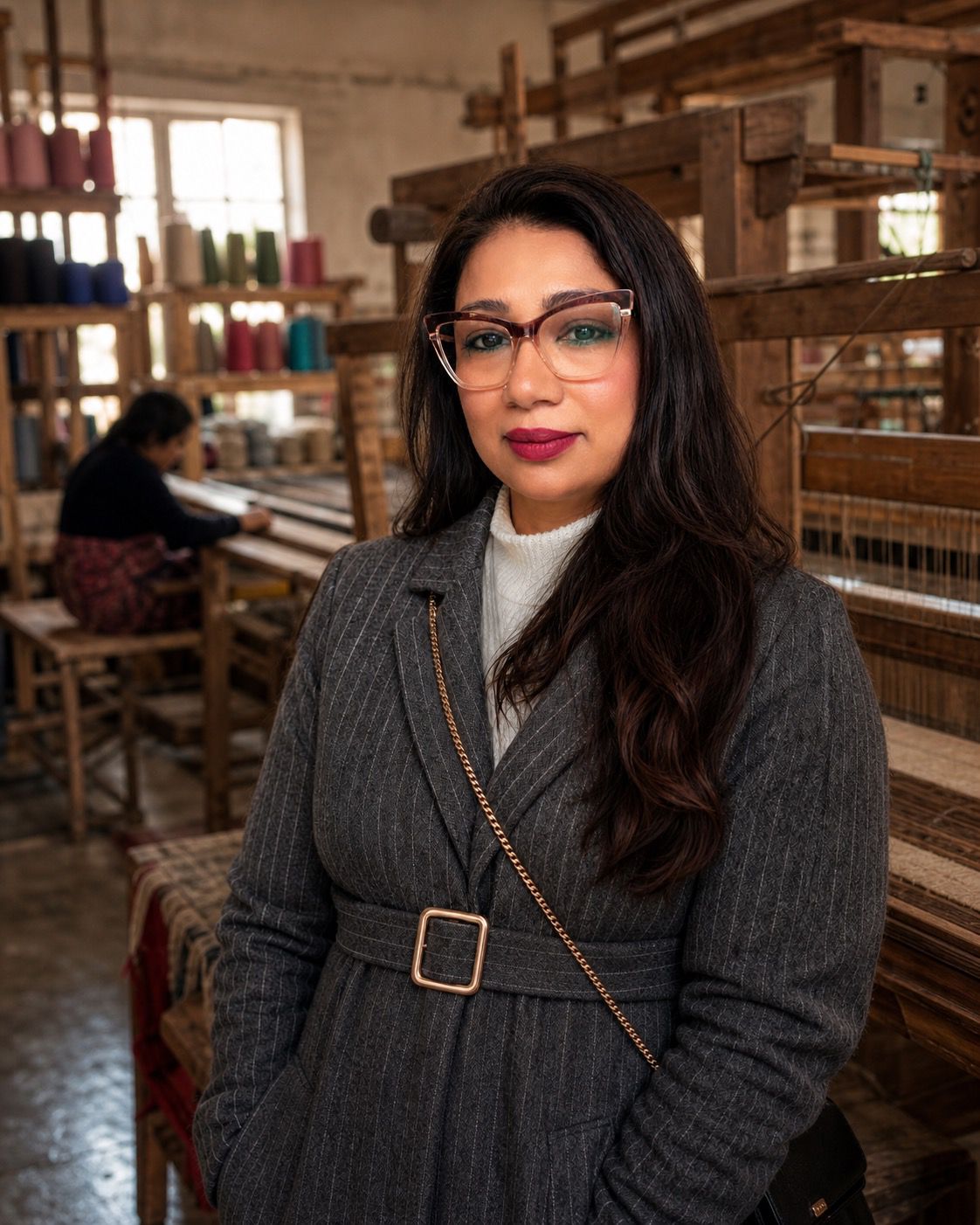
Mahjabeen Bano

“I grew up surrounded by handloom textiles. My family was deeply embedded in the weaving trade in India, and from an early age I understood the difference between fabric made by hand on a traditional loom and fabric produced by machine.”

Mahjabeen holds an MA in Fashion Design from Sheffield Hallam University, where her thesis examined how women artisans integrate cultural identity into craft work. Her experience spans luxury retail merchandising for international clients, trend research and technical design in India, and two years building Silk and Soil in the UK.

Weft Passport is not a market opportunity she identified from the outside. It grew directly from her lived experience on both sides of the provenance problem — the weaving communities of Varanasi, and the regulatory and commercial expectations of UK and EU fashion brands.
MB
How it started

From Silk and Soil to Weft Passport

2015 – 2019

Working in luxury retail and fashion design

Assistant Merchandiser at Xcess Merchandising Services managing luxury retail accounts for international clients including Restoration Hardware. Assistant Fashion Designer at Anant Fashion House conducting trend research and developing technical sketches.

2020 – 2022

MA in Fashion Design at Sheffield Hallam University

Thesis focused on empowering women artisans in the craft sector, examining how artisan expertise, cultural identity, and design thinking combine to create products carrying meaning beyond material value. This research became the intellectual foundation of Weft Passport.

2023 – 2024

Building Silk and Soil in the UK

Established an ethical fashion label sourcing directly from artisan partners in Varanasi. Built collections based on genuine heritage craftsmanship, documented production, and observed machine-made fabrics routinely sold as handwoven in UK markets.

2025

Weft Passport is founded

Recognised that the gap between artisan production reality and market verification was structural, not anecdotal. Built the certification framework and field methodology, and secured 5+ Letters of Intent from UK and EU ethical fashion brands.

Values

What we believe

Radical traceability

Transparency should be granular. We don’t stop at the country of origin — we go to the loom level, ensuring every product has a documented biography.

Artisan equity

We exist to protect the intellectual and manual property of master weavers. By verifying their craft, we help ensure they receive the premium value their skills deserve.

Integrity over hype

We prioritise field-truth photos, logs, and physical evidence over buzzwords. Our system is built on audit-ready documentation that stands up to strict UK and EU scrutiny.

Cultural stewardship

We view South Asian textiles not as commodities, but as living history — preserving heritage techniques for future generations through digital preservation.

Regulatory reliability

As a UK-based partner, we operate with the precision of a compliance firm — giving fashion brands the data-backed confidence to make bold, honest claims.

Team

The founding team

MB

Mahjabeen Bano

Lead Founder & CEO

Principal designer of the Weft Passport certification framework. Lifelong access to Varanasi handloom weaving communities through family background. MA Fashion Design (Sheffield Hallam). Former luxury retail merchandising and fashion design experience across India and Italy.

SC

Sachin

Co-Founder & CTO

Owns the technical architecture: proprietary relational data schema, mobile-first field capture, anomaly detection, compliance translation layer, and cloud infrastructure. MSc Big Data Analytics (Distinction, Birmingham City University). 3.5+ years of production-scale data systems architecture.

Why this team cannot be easily replicated

The founding team combines field-calibrated methodology with production-scale technical architecture. The CEO’s multi-decade family relationships in Varanasi reduce trusted onboarding time from years to months. The CTO’s data architecture is designed specifically for non-linear, household-based artisan production that conventional supply-chain schemas cannot accommodate.

A well-funded competitor could replicate surface software in 4–6 months. They could not replicate the verified artisan registry, the proprietary SOPs, the cooperative trust networks, or the continuously maintained regulatory translation layer in that timeframe.

Join the team building the verification layer for heritage fashion

We are hiring field coordinators, compliance advisors, and brand partnership managers. Get in touch.

Contact usBack to home